
About The Department
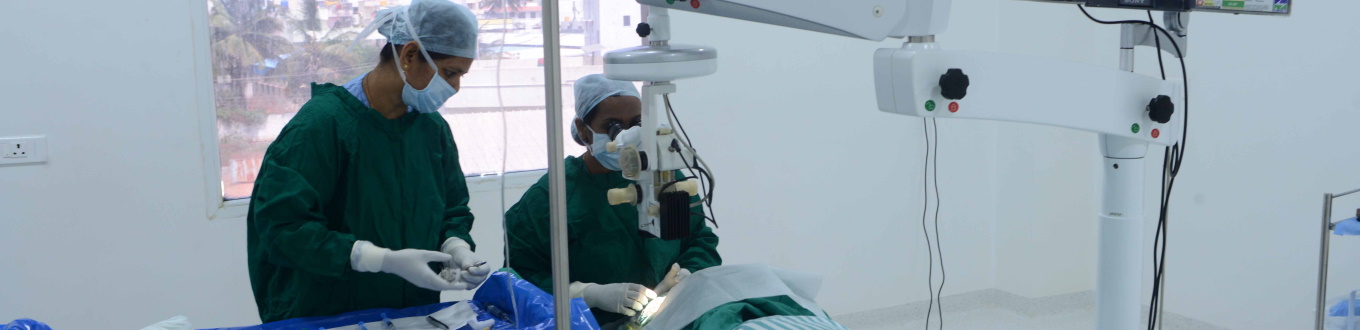
The Department of Ophthalmology at St. Peter’s Medical College Hospital & Research Institute, Hosur, is committed to delivering comprehensive, patient-centred eye care through clinical expertise, modern diagnostic facilities, and a wide range of medical and surgical services. The department manages routine and complex eye conditions through general outpatient services and dedicated speciality clinics, supported by a dedicated ophthalmic operation theatre, an Eye Bank, and a Corneal Transplantation Centre. Alongside undergraduate and postgraduate medical education and continuing professional development, the department actively promotes community eye health through DBCS and National Programme for Control of Blindness and Visual Impairment (NPCB) initiatives, community eye camps, and school eye-screening camps and awareness programmes. Through these clinical, academic, and outreach activities, the department strives to prevent avoidable blindness and improve access to quality eye care for the communities it serves.
General Ophthalmology OPD: 9:00 AM–4:00 PM.
| Day | Speciality Clinic | Timing |
| Tuesday | Cornea Clinic | 2:00–4:00 PM |
| Wednesday | Glaucoma Clinic | 2:00–4:00 PM |
| Thursday | Squint and Oculoplasty Clinic | 2:00–4:00 PM |
| Friday | Retina and Neuro-ophthalmology Clinic | 2:00–4:00 PM |
Faculty Members
| Faculty Member | Designation |
| Prof. Dr. Sathyalakshmi M.H. | Head of the Department |
| Dr. Anupriya A. | Associate Professor |
| Dr. Meghana | Assistant Professor |
| Dr. Deepa Kamble | Assistant Professor |
| Dr. Ritu Kiran | Senior Resident |
| Dr. Sneha R. | Senior Resident |
MS in Ophthalmology
Undergraduate: MBBS — undergraduate teaching and clinical training in Ophthalmology.
Postgraduate: MS Ophthalmology — postgraduate education and clinical training in the speciality.
Events
Events and Awareness Programmes
The department conducts eye-health awareness activities for World Sight Day and Eye Donation Fortnight. It also supports school eye-screening camps and educational programmes to promote eye health, encourage early identification of vision problems, and facilitate appropriate referral for further assessment and care.
EYE-Q: The Emerging Intelligence Behind Vision was organised as a CME focused on Artificial Intelligence in Ophthalmology, including the debate session “AI: Promise or Peril?” on 8 October 2026.
Community Outreach
The department conducts approximately 4–6 community eye camps every month in collaboration with the District Blindness Control Society (DBCS), contributing to blindness-prevention activities under DBCS and the National Programme for Control of Blindness and Visual Impairment (NPCB). Outreach activities also include school eye-screening camps and school-based eye-health awareness programmes, helping identify children with possible vision problems and guide them towards appropriate evaluation and care. Reported monthly community outreach activity includes approximately 600–700 patients screened and 70–80 cataract surgeries.
Departmental Achievements
Annual surgeries performed:
2024: 554 surgeries
2025: 1,307 surgeries
The annual surgical volume increased from 554 surgeries in 2024 to 1,307 surgeries in 2025, representing approximately 136% growth.
Facilities
Diagnostic and Therapeutic Facilities
The department has the following diagnostic and therapeutic equipment:
Optical Coherence Tomography (OCT)
Fundus camera
Automated perimetry / visual field analyser
A-scan and B-scan ultrasonography
Nd:YAG laser
Argon laser
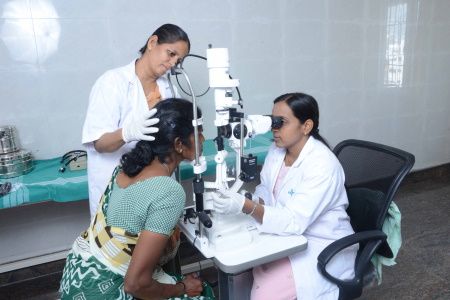
Slit-lamp biomicroscopes
Applanation tonometer
Auto-refractometer
Keratometer
Direct and indirect ophthalmoscopes
Surgical Services
Cataract Surgery
Phacoemulsification with intraocular lens implantation
Manual Small-Incision Cataract Surgery (MSICS)
Premium intraocular lens implantation, including trifocal IOLs
Corneal Surgery
Corneal collagen cross-linking (C3R)
Corneal transplantation
Pterygium excision
Refractive Surgery
Implantable Collamer Lens (ICL) implantation
Glaucoma Surgery
Trabeculectomy
Other indicated glaucoma procedures
Squint Surgery
Surgical correction of ocular misalignment
Oculoplasty
Dacryocystorhinostomy (DCR)
Surgical management of eyelid and periocular disorders
Retinal Services
Intravitreal injections
Management of vitreous haemorrhage and other vitreoretinal disorders
Epiretinal membrane peeling and macular hole surgery
Silicone oil injection and removal
Surgical management of retinal detachment, including scleral buckling where indicated
Pars plana vitrectomy
Retinal laser photocoagulation
Minor Ophthalmic Procedures
Chalazion incision and curettage
Ocular foreign body removal
Other indicated minor ophthalmic procedures
Operation Theatre and Other Facilities
Dedicated ophthalmic main operation theatre
Dedicated ophthalmic minor operation theatre
Ophthalmic operating microscope
Phacoemulsification system
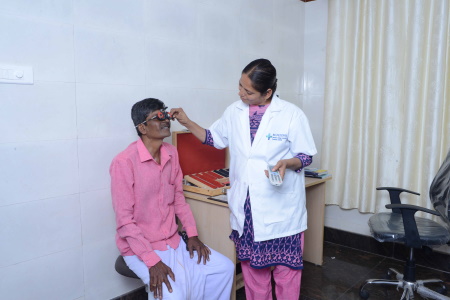
Refraction room
Optical dispensing facility
Eye Bank and Corneal Transplantation Centre
The department provides 24/7 emergency ophthalmic services for urgent conditions including ocular trauma, chemical and thermal injuries, acute glaucoma, and other sight-threatening ophthalmic emergencies.
Eye Bank and Corneal Transplantation
The department has an Eye Bank and Corneal Transplantation Centre, supporting specialised corneal care and corneal transplantation services for eligible patients with corneal disease and corneal blindness.